




















Skyward Siege: The Dance of Survival in the Bullet-Hell Stratosphere
The question hangs in the ionized air, as stark and urgent as a cockpit alarm: How to survive the enemy's bullets? The answer is not found in a manual or a hidden power-up. It is etched into your reflexes, mapped into your instinct. It depends on your ability. This is the uncompromising creed of the arena above the clouds, an arcade game that is easy to learn and difficult to master, where every sortie is a lesson written in tracer fire and contrails.
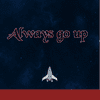
You are not just a pilot; you are a solitary dancer in a geometric storm. The core principle is instinctive: click and hold or tap and slide to navigate your jet fighter through the lethal embroidery of enemy fire. The controls are immediate, granting you the fluid grace of a bird of prey. But mastery is a distant peak. To learn is to understand movement; to master is to predict the very weave of the battlefield's chaos, to find the invisible paths between volleys.
The simplicity of ground combat is left far below. The battle in the air is even more exciting, a three-dimensional chess match at supersonic speeds. Here, threats don't just approach—they swarm and envelop. The most terrifying of these are the tracking missiles coming from all directions. Their signature screech is the sound of impending doom, as they curve and dog your every maneuver with malicious intelligence. They are deadly, a constant test of your poise under pressure.
Yet, within this desperation lies your salvation: a razor's edge of tactical brilliance. The game introduces a moment of sublime risk and reward. Your fighter can generate a protective ring, a shimmering barrier of energy. The rule is absolute and thrilling: if the missile does not hit the aircraft before the formation of the protective ring, it will trigger an invincible state. This mechanic transforms panic into strategy. Do you activate the ring early for safety, wasting its precious charge? Or do you court annihilation, waiting until the last possible millisecond as the missile fills your screen, to maximize your window of invulnerable retaliation? This split-second decision is the heartbeat of the game, turning defensive scrambles into offensive opportunities.
But survival is merely the prerequisite. Soldier, you still have a lot of tasks to accomplish. The sky is not an empty void; it is a mission theater. You must escort vulnerable allies, strike key ground targets, engage in dizzying dogfights with elite enemy aces, and defend moving zones from overwhelming waves. Each objective varies the rhythm, forcing you to adapt your dance of evasion to a specific, pressing goal.
The visual spectacle is a neon-drenched symphony of light and motion. Bullets paint the sky in glowing lattices, explosions bloom like fiery flowers, and your jet leaves brilliant afterimages as you twist through impossible gaps. The sound design is crucial—the roar of your engine, the staccato chatter of guns, the lock-on ping of missiles, and the empowering hum of your protective ring forming.
So, the final transmission cuts through the static: Are you ready? The runway is clear. Your fighter hums with potential. A sky full of challenges—and missiles—awaits your unique signature. This is where instinct meets geometry, where courage meets calculation. Click in. Hold. Slide into the storm. Your ability is the only co-pilot you need. Survive, accomplish, and become legend. The sky is waiting to be carved by your courage.
Click and hold or tap and slide to navigate the jet fighter.
Embed this game